The Last Air Purifier
You'll Ever Buy™
Your sinuses aren't lying to you.
The air in your home contains the particles triggering your symptoms. AeraClear removes 99.97% of allergens down to 0.1 microns. Most people feel the difference within 48 hours.
Never run out mid-allergy season. Cancel anytime.
You've cleaned the floors.
You've washed the sheets.
The air is still the problem.
Pollen, pet dander, dust mite debris, and mold spores don't settle. They float. Your HVAC recirculates them. Your vacuum kicks them up. Cleaning your surfaces every day doesn't remove a single particle from the air you're breathing right now.
The cycle ends when you address what you're breathing, not just what you're touching.
Three layers.
Nothing gets through.
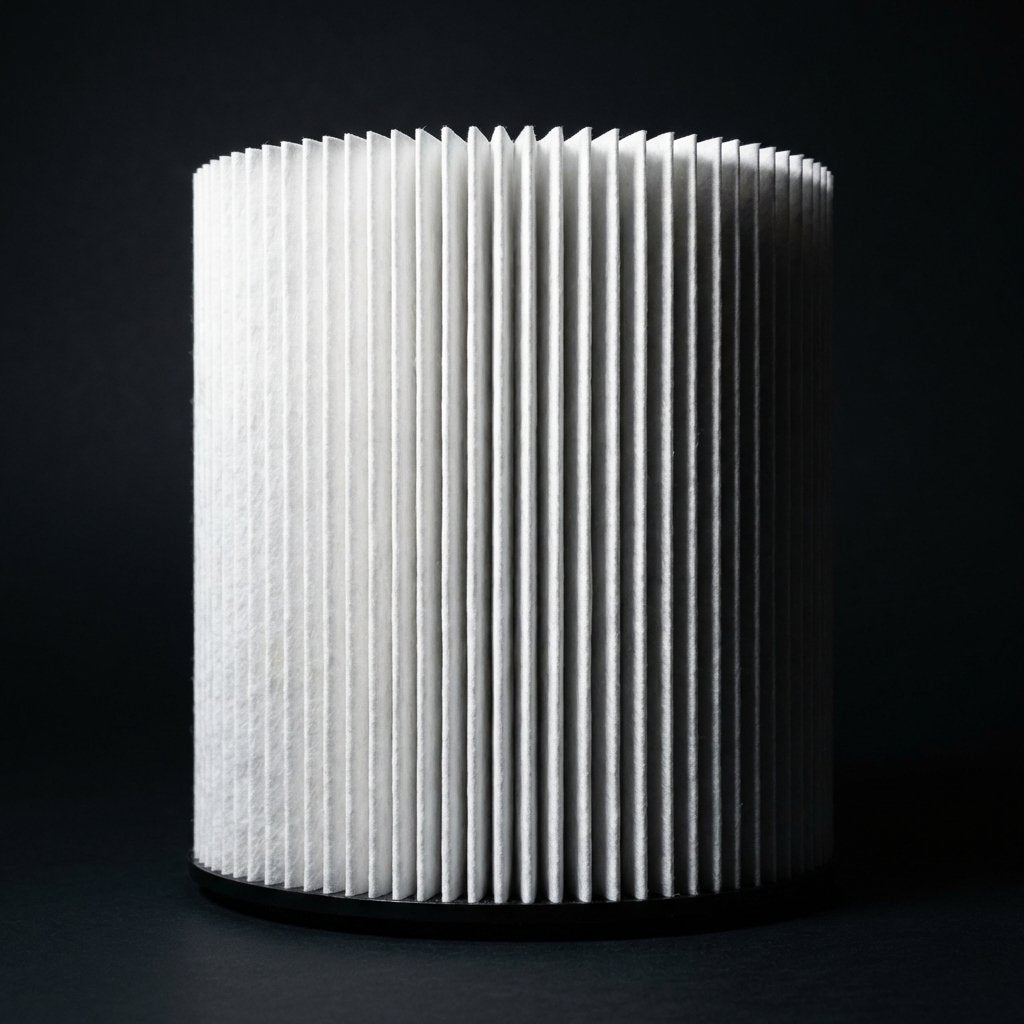
Most air purifiers use a single filter and call it clean. AeraClear runs air through three sequential stages — each built for a different particle size and type. The difference isn't marketing. It's physics.

Catches what
you can see.
The outermost layer handles the coarse work — pet hair, visible dust, large pollen grains. This isn't just filtration. It's protection for the layers beneath it.
Without a pre-filter, large particles saturate the HEPA 14 media in half the time. The pre-filter extends filter life from 3–4 months to 6–8 months. It's washable, costs nothing to replace, and does the job every HEPA purifier should have been designed with from the start.
Most competitors skip the pre-filter to reduce manufacturing cost. The tradeoff: you replace the HEPA filter twice as often at $39–$49 each time.

The grade above
HEPA 13. On purpose.
HEPA 13 is the industry standard. It captures 99.95% of particles at 0.3 microns — the size most labs use for testing because it's the hardest to trap. But it's not the size that matters most for allergy sufferers.
The allergen fragments that trigger symptoms most often — fine pet dander, dust mite debris, sub-pollen particles — sit between 0.1 and 0.3 microns. HEPA 13 misses a meaningful fraction of those. HEPA 14, tested at 0.1 microns, doesn't. That's the measurable difference. That's why this exists.
EN 1822 standard. All three allergen types fall below 0.3 µm — the HEPA 13 test threshold. HEPA 14's 0.1 µm certification covers them all.
For what
HEPA can't catch.
HEPA filters capture particles. They don't capture gases. VOCs from cleaning products, formaldehyde from furniture, cooking odors, pet odors, smoke — all of these pass straight through a HEPA filter unchanged.
The activated carbon layer handles what comes through as vapor. For allergy sufferers, this matters beyond smell: VOC exposure and allergen exposure affect the same air. One device handles both. That's not marketing — it's how air chemistry works.
Carbon filtration requires surface area — ours uses granular activated carbon rather than a thin carbon cloth coating, which depletes within weeks at high VOC concentrations.
Real results.
Specific numbers.
"I've had seasonal allergies my entire life. Every spring I'd spend 3 months miserable. This is the first spring in 14 years I made it through without reaching for medication. I'm not exaggerating. The difference was noticeable within two days."
"Bought this for our daughter's room — she's 4 and has had severe dust mite allergies since she was 2. Her nighttime coughing stopped completely within a week. We noticed a significant improvement at her follow-up."
"I have two cats and the dander situation was out of control. Within 3 days the eye-watering stopped completely. I wish I had bought this 2 years ago."
You've already looked at
Levoit and Coway. Here's the honest difference.
HEPA 13 vs. HEPA 14 isn't a marketing distinction. HEPA 14 captures 99.97% of particles down to 0.1 microns. HEPA 13 captures 99.95% down to 0.3 microns. For allergen sufferers, that gap is real.
| Feature | Levoit Core 300 — $99 | Coway AP-1512HH — $120 | Winix A230 — $130 | AeraClear — $239 |
|---|---|---|---|---|
| HEPA grade | ✕ HEPA 13 | ✕ HEPA 13 | ✕ HEPA 13 | ✓ HEPA 14 |
| Minimum particle size | 0.3 microns | 0.3 microns | 0.3 microns | ✓ 0.1 microns |
| Coverage | 219 ft² | 360 ft² | 360 ft² | ✓ 600 ft² |
| Real-time AQI sensor | ✕ No | – Basic indicator | ✓ Yes | ✓ Yes — 2-min update |
| CARB Certified (zero ozone) | ✕ No | ✓ Yes | ✓ Yes | ✓ Yes |
| Sleep mode noise | 24 dB | 24 dB | 26 dB | ✓ 22 dB |
| ALA Partnership | ✕ No | ✕ No | ✕ No | ✓ Yes |
| Annual filter cost | $39 | $49 | $44 | $39 (subscribe) / $49 one-time |
The honest math: Levoit Core 300 at $99 + annual filter = $138 year one. AeraClear at $239 with free replacement filter included = $239 year one. $101 more for HEPA 14 coverage, 2.7× the room coverage, and the real-time AQI sensor. If your allergy symptoms are driving the purchase decision, the $101 premium is not the relevant variable.
Quieter than
your thoughts.
The most common reason people return air purifiers: they can't sleep through the noise. Sleep mode runs at 24 dB — below what most people consciously register. Most users describe it as white noise that improves sleep.
"I was worried it would keep me up. I actually sleep better now — the white noise drowns out the street. My symptoms have essentially stopped and I sleep through the night."
— Rachel P., Boston MA
24 dB is below the threshold most people consciously register in a quiet bedroom.